
KEY POINTS
-
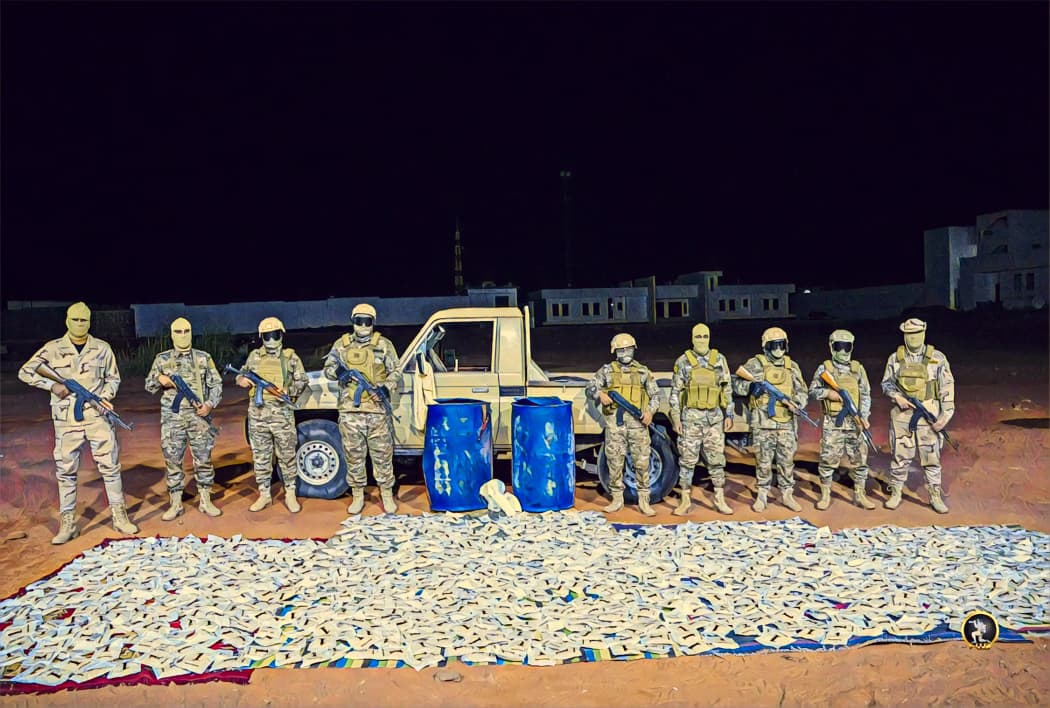
Eastern Libyan authorities seized more than four million narcotic pills and 29 kilogrammes of cocaine and hashish in Derna.
-
Several suspected members of a drug-trafficking gang were arrested during the operation.
-
A United Nations report says Libya has become a major transit route for synthetic drugs and other narcotics across North Africa.
Authorities in eastern Libya have seized more than four million narcotic pills, alongside 29 kilogrammes of cocaine and hashish, during an anti-drug operation in the coastal city of Derna.
The seizure took place on Tuesday, November 17, 2026, according to a statement from the Interior Ministry’s General Administration for Combating Drugs.
The agency said members of a suspected drug-trafficking gang were arrested during the operation but did not disclose the number of suspects or provide further details about their identities.
Photographs released by the administration showed piles of blocks of hashish, as well as boxes and transparent bags containing white tablets.
The agency’s director, Major General Ahmed Al-Shamikh, said the authorities would not tolerate activities that threaten the country’s security and the wellbeing of its young population.
In a video statement released on Tuesday night, Al-Shamikh warned that the authorities would show no leniency towards anyone involved in activities that endangered the future of the country.
Libya remains a major drug transit route
The latest seizure comes amid growing concerns about drug trafficking through Libya, which has become a major regional transit point for synthetic drugs and other narcotics.
A United Nations report released in January identified the country as an important route for drugs destined for local markets, other parts of North Africa and the wider African continent.
The report, published by the United Nations Office on Drugs and Crime (UNODC), said criminal networks had taken advantage of Libya’s prolonged political instability to expand their trafficking activities.
Drug gangs have exploited weak security structures and the country’s divided political environment to move narcotics through its territory.
Political instability creates opportunities for criminal networks
Libya has experienced prolonged instability since the 2011 uprising that toppled former leader Muammar Gaddafi in a NATO-backed intervention.
The fall of Gaddafi plunged the country into years of internal conflict, political division and weakened state institutions.
In 2014, a civil war broke out between rival armed factions competing for power, eventually leaving the country divided between eastern and western administrations.
The continuing divisions have complicated efforts to establish effective nationwide security and law enforcement structures.
The latest operation in Derna represents another attempt by eastern Libyan authorities to disrupt drug trafficking networks operating in the country. However, the wider challenge remains significant as criminal groups continue to exploit Libya’s instability to move narcotics across regional borders.