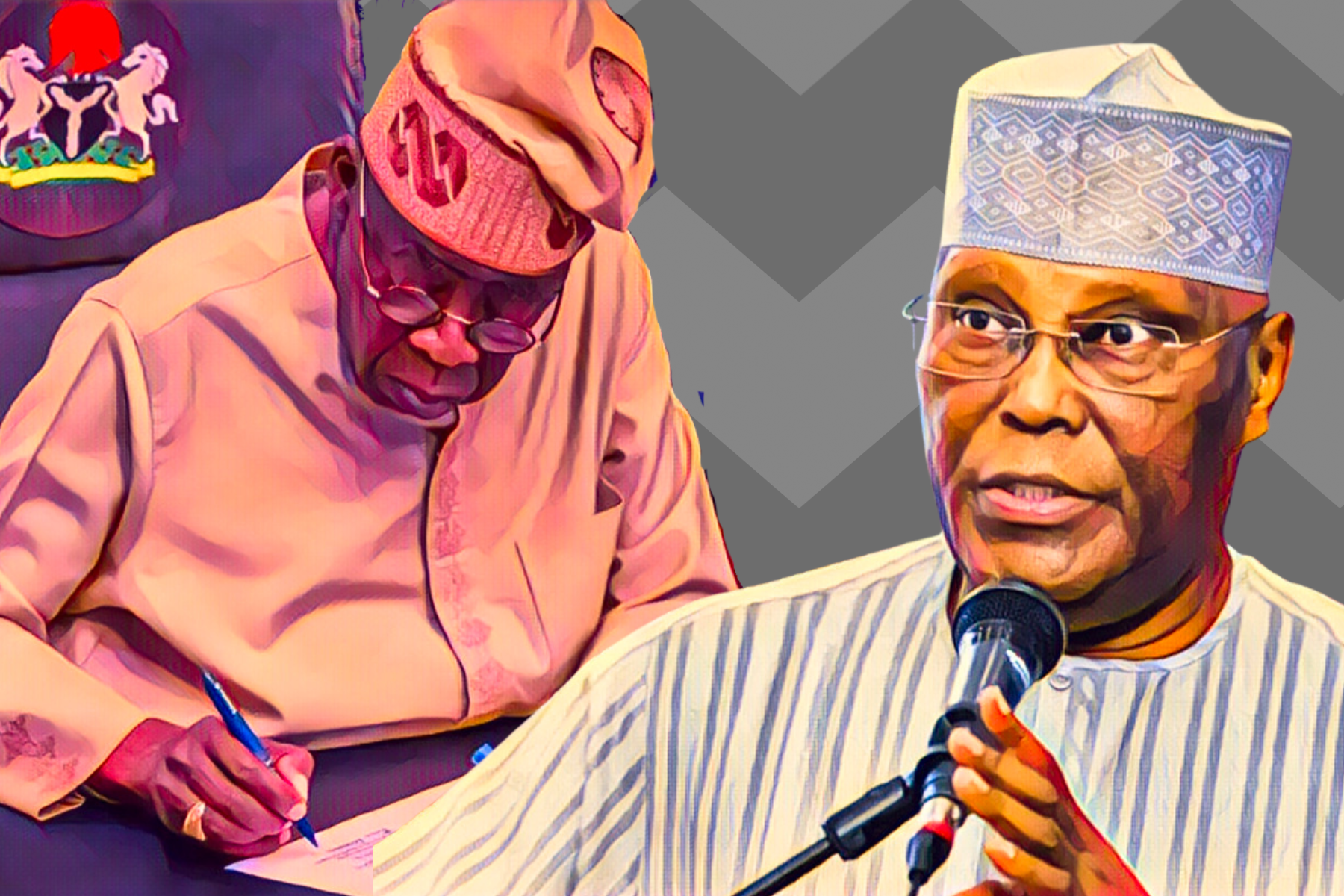
Nigerian President Bola Tinubu has asked lawmakers to approve a new round of foreign borrowing worth about $21.7 billion, and the opposition is already demanding to see exactly where the money would go.
The request covers $20.52 billion and 1.05 billion euros, roughly $1.17 billion, for 2026 and 2027. Tinubu laid it out in a letter to Senate President Godswill Akpabio, who read it aloud during plenary Tuesday. Nothing has been approved yet.
What the president wants to fund
Tinubu says the loans would plug a financing gap created by Nigeria’s huge infrastructure needs. The projects would span all 36 states and the Federal Capital Territory, he wrote, touching power, transportation, health, education, agriculture, water supply, security and job creation. Some of the money would also go toward financial management reforms.
He told lawmakers the projects had passed technical and economic reviews. He also pressed for early approval so work could begin promptly.
Akpabio sent the proposal to the Senate Committee on Local and Foreign Debts, chaired by Sen. Haruna Manu. The Appropriations and Finance committees will weigh in too. Akpabio noted that parts of the plan had appeared in earlier borrowing proposals covering 2025 to 2027, and said the debts committee would clarify exactly what is new. Tinubu has sent several borrowing requests since taking office in 2023. They include a package of about $21.5 billion in May 2025 and another of roughly $2.3 billion that October.
Opposition says it’s flying blind
Atiku Abubakar, a former vice president and the African Democratic Congress presidential candidate, wasted no time. He said the letter lists broad sectors but no projects, costs, locations or contractors. He also pointed to the timing, about 12 weeks before an election, and asked whether the borrowing could end up financing campaigns rather than roads.
Atiku tied the request to a warning he issued Oct. 12 about a possible $20 billion loan linked to the Lagos-Calabar Coastal Highway, which has since been rerouted inland. He urged the Senate to hold off. “No public money should be borrowed in the dark,” he said.
The Presidency had not answered Atiku’s latest claims in the reports reviewed. Presidential spokesman Bayo Onanuga has argued before that borrowing is not the problem as long as the money is spent well. He has also said Nigeria’s debt, at roughly 40% of its economy, compares well with that of South Africa, Egypt and Kenya.
A debt load already under strain
The numbers are big. Nigeria’s total public debt hit 166.79 trillion naira at the end of June, according to the Debt Management Office. That is up 7.44 trillion naira in three months. Daily Trust estimated the new loans could equal about 30 trillion naira at current exchange rates, and could push external debt past 200 trillion naira by year’s end, depending on disbursements and currency swings.
The 2026 budget of 68.32 trillion naira carries a deficit of 23.85 trillion naira, which is meant to be covered by borrowing.
Economists are split on how worried to be. One, Muhammad Bashir-Yusuf of Al-Hikmah University in Ilorin, said borrowing for core infrastructure is normal and can pay for itself through a bigger revenue base. His warning was about follow-through. The danger, he said, is money that gets borrowed and then spent on something else.