
KEY POINTS
-
The ADF earns an estimated $1 million to $1.6 million annually from gold sites in one North Kivu area.
-
Gold is smuggled through eastern Congo to trading hubs and refiners in Uganda.
-
The Sentry urges governments to target the traders and financiers supporting the group’s gold network.
Gold mining and smuggling have become major sources of income for the Allied Democratic Forces (ADF), an Islamic State-linked militant group operating in eastern Democratic Republic of Congo (DR Congo), according to a new report by US-based investigative organisation The Sentry.
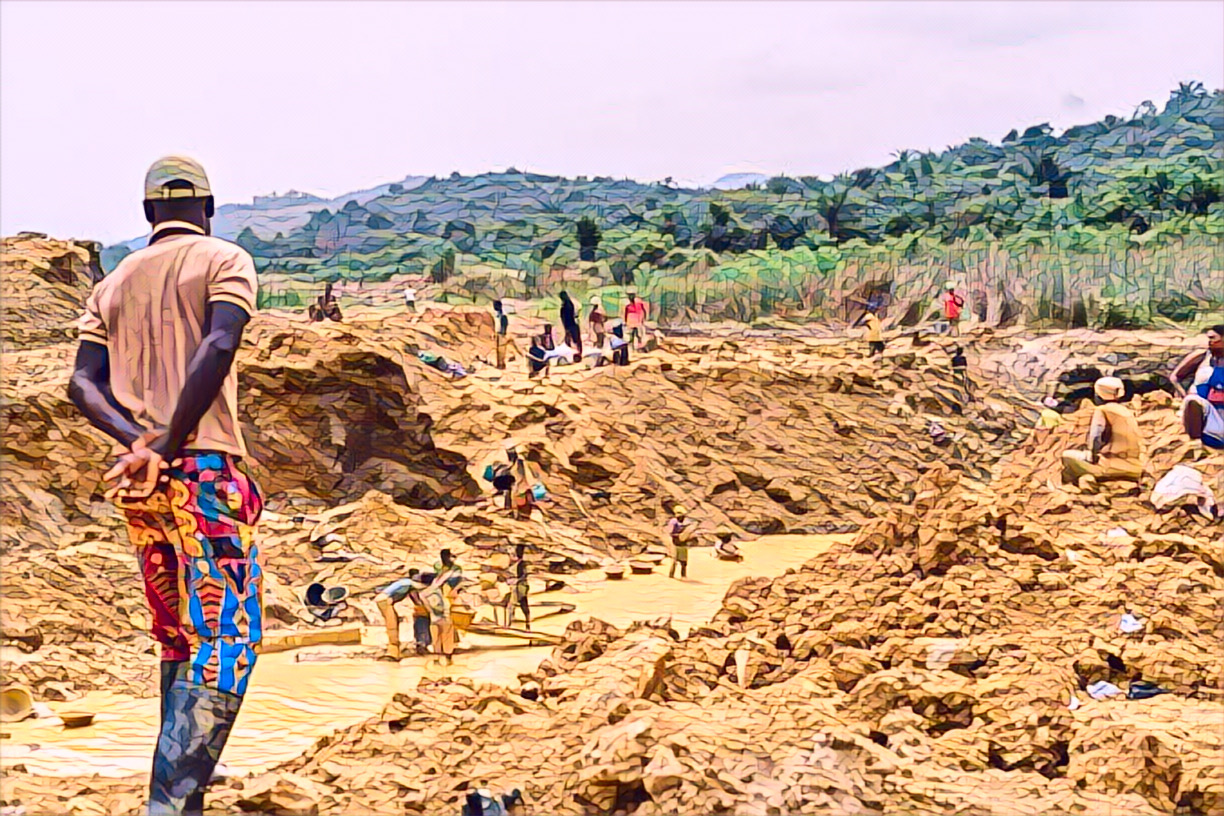
The report, published on Tuesday, October 27, 2026, estimates that the group generates between $1 million and $1.6 million annually from gold mining sites in one area of North Kivu province alone.
The revenue has helped the ADF finance its operations and reduce its dependence on financial support from Islamic State networks, particularly after US sanctions targeted key facilitators linked to the group in late 2024.
The report said gold extracted in eastern Congo is moved through local trading centres before reaching refiners and export networks in neighbouring Uganda.
ADF expands control around mining sites
The ADF has adapted to sustained military pressure by establishing a presence in remote mining areas across North Kivu, Ituri and Tshopo provinces.
According to The Sentry, the group has continued operating despite joint military campaigns by Congolese and Ugandan forces, which began in late 2021 and helped secure major cities and trade routes.
Rather than being defeated, the group has become more dispersed and moved deeper into areas where mineral extraction and informal trading provide opportunities to generate income.
A representative of a Congolese mining cooperative told Reuters that ADF fighters entered the area in mid-2024 and established bases near mining sites.
The representative, who requested anonymity for security reasons, said the militants abducted miners and prospectors and forced them to extract, transport and sell gold on the group’s behalf.
Some local residents reportedly cooperated with the group in exchange for payment, creating an economic network sustained by both coercion and financial incentives.
Gold trade reduces dependence on external funding
The report said the ADF has increasingly relied on revenue from gold and other local economic activities to sustain its operations.
Besides gold mining and smuggling, the group generates money through cocoa production, extortion and kidnapping.
Justyna Gudzowska, executive director of The Sentry, said the group had adapted to military pressure and sanctions by developing alternative sources of funding, particularly through the trafficking of gold and other resources.
She called on governments to target the financiers, gold traders and intermediaries who facilitate the group’s illicit activities.
The report’s findings suggest that disrupting the financial networks connecting mining sites, trading hubs and foreign refiners could form an important part of efforts to weaken the insurgency.
Uganda has deployed thousands of troops to DR Congo to help local forces fight the ADF. However, the group’s continued access to local economic networks has made efforts to eliminate its operations more difficult.
ADF has operated in the region for decades
The ADF originated as an Islamist group in Uganda during the 1990s but shifted most of its operations to eastern DR Congo by 2000.
It pledged allegiance to Islamic State in 2019 and has since combined its local insurgency along the Uganda-Congo border with wider jihadist ambitions. The group has also carried out bomb attacks in Uganda.
Over the past decade, the ADF has killed thousands of people in attacks against civilians and security forces in eastern Congo.
The group continues to operate as much international attention remains focused on the AFC/M23 rebellion, also referred to in the report as FRN, which seized large areas of eastern Congo in 2025.
The Sentry’s findings underline how illicit mineral trading can help armed groups sustain their activities even when they face military operations and international sanctions.