
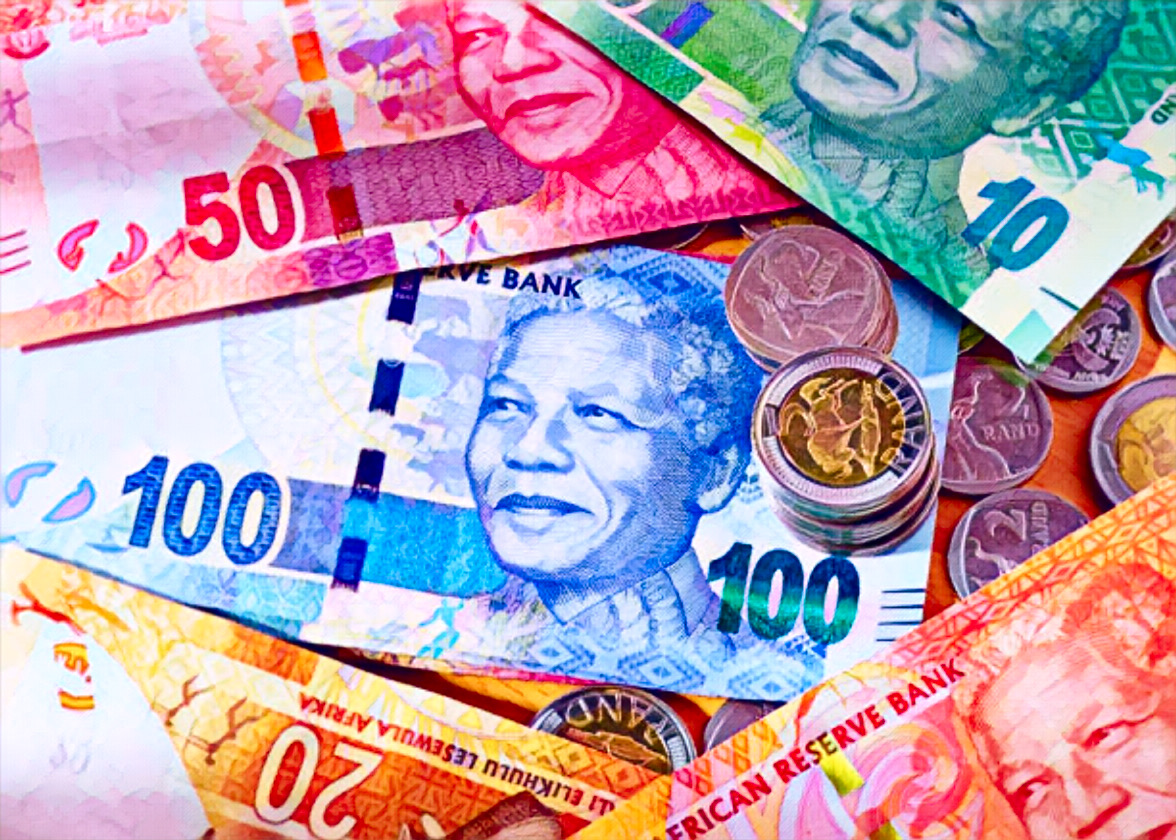
The South African rand was steady in early trade on Tuesday, ahead of central bank data that showed the country’s leading business cycle indicator rose in August.
Leading indicator turns positive
The South African Reserve Bank’s composite leading business cycle indicator rose 1.1% month on month in August, after a 0.8% decline the previous month, according to data published Tuesday. The indicator tracks vehicle sales, business confidence, money supply and other factors to gauge the outlook for Africa’s most industrialized economy.
Analysts caution against reading too much into a single print. A swing from contraction to a modest gain fits a series that is volatile from month to month, and single readings have often been revised or reversed, while a sustained run of improvements has tended to precede shifts in the growth outlook, according to Newsquawk.
Rand drifts in a narrow range
On Monday, the rand traded at 16.6125 against the dollar at 0602 GMT, little changed from its previous close. That is weaker than the roughly 16.41 it traded at on Oct. 20 and 21, around the government’s medium-term budget, and follows a decline of more than 2% in September.
South Africa’s benchmark 2035 government bond yield was steady at 8.635% on Monday.
Fed decision and local data in focus
Investors are watching the Federal Reserve’s policy meeting on Oct. 28. Traders largely expect the central bank to leave rates unchanged, while the probability of a hike in December stands at 75%, according to CME’s FedWatch Tool.
Like other risk-sensitive currencies, the rand often takes its cues from global drivers such as U.S. monetary policy, and it has been sensitive to global sentiment since the U.S.-Iran war began on Feb. 28.
Oil prices edged lower on Tuesday on hopes of diplomacy, with Brent at about $114.81 a barrel, near six-month highs, a level that keeps fuel costs elevated for South Africa.
Domestic investors will also track month-end data this week, including money supply, private sector credit, trade balance and budget balance, as well as September producer inflation.
A soft economic backdrop
The data come against a weak economic backdrop. South Africa’s economy contracted 0.2% in the second quarter, and mining production fell 12.7% year on year in August, with platinum group metals, coal and iron ore leading the decline, according to Statistics South Africa.
Finance Minister Enoch Godongwana presented the medium-term budget policy statement last Wednesday, which had been expected to offer clues on the fiscal trajectory amid expectations of an improving budget balance and a more favorable sovereign ratings outlook. Business groups welcomed the budget but urged faster reforms, BusinessDay reported.
Economists polled by Reuters had expected headline inflation to accelerate to 4.7% in September from 4.4% in August.