
KEY POINTS
-
Kenya’s Ebola outbreak has reached nine confirmed cases, including the first patient’s four relatives and four healthcare workers.
-
Authorities have identified 135 contacts, with 134 in quarantine as of October 20.
-
The first group of contacts is expected to complete its 21-day quarantine on October 25, provided they remain free of symptoms.
Kenya’s Ebola outbreak has reached nine confirmed infections after another person who had contact with the country’s first patient tested positive while in quarantine, according to the Ministry of Health.
The new case was announced on Tuesday, October 20, 2026, as health authorities continued efforts to contain the outbreak and prevent further transmission.
The ministry said there was no evidence that the virus had spread beyond people already identified as contacts of the first patient. However, officials warned that the number of contacts under surveillance could increase as investigations identify more people who may have been exposed to the virus.
Authorities have so far identified 135 contacts linked to the nine confirmed cases, with 134 in quarantine. Health teams are continuing to trace people who may have come into contact with infected individuals as part of efforts to interrupt transmission.
First Patient Died on Day of Diagnosis
Kenya announced its first Ebola case on October 6, involving a man who had travelled from the Democratic Republic of Congo through Uganda before arriving in Nairobi on October 3.
According to the health ministry, a relative drove the man to a hospital, where he tested positive for Ebola on October 5. He died later that same day.
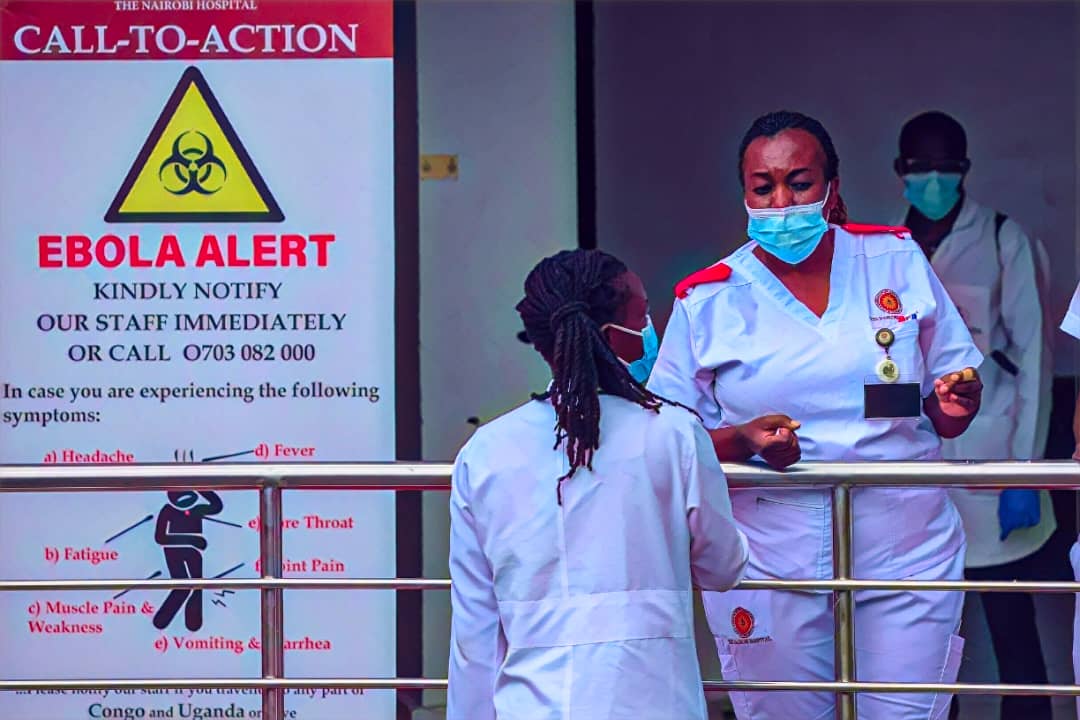
Since then, four of his relatives and four healthcare workers have tested positive, bringing the total number of confirmed infections to nine.
The latest patient was among those already identified as contacts of the first case and was in quarantine when the infection was detected. The development demonstrates the importance of monitoring exposed individuals even when they have not initially developed symptoms.
Kenyan authorities have not reported evidence of transmission beyond the known contacts associated with the first patient. Continued contact tracing and isolation are intended to reduce the possibility of the virus spreading into the wider community.
Quarantine and Contact Tracing Continue
Health officials have identified 135 contacts linked to the nine patients, of whom 134 were in quarantine as of Tuesday.
The first group of contacts was expected to complete its 21-day quarantine period on October 25. The ministry said individuals who remained free of symptoms would be allowed to return home after completing the required period.
Authorities also appealed to communities to welcome those completing quarantine and avoid treating them as a source of infection.
The ministry said the individuals who completed the monitoring period without developing symptoms “pose no risk of infection”.
The appeal is intended to limit stigma against people who have been quarantined as a precaution. Contact tracing and quarantine are public health measures designed to identify possible infections early, rather than evidence that everyone placed under monitoring has contracted the virus.
Officials said the contact list could continue to grow as investigations uncover additional people who may have been exposed to any of the confirmed patients.
How Ebola Spreads
Ebola is a severe viral disease that can cause serious illness and death. It spreads through direct contact with the blood or other bodily fluids of an infected person who is showing symptoms, or through contact with contaminated materials such as clothing and bedding.
The virus can spread during caregiving and healthcare activities when appropriate infection prevention measures are not followed. This makes the identification of exposed relatives and healthcare workers particularly important during an outbreak.
People who may have been exposed should follow instructions from public health authorities, report symptoms promptly and avoid close contact with others if infection is suspected. Healthcare facilities also need to follow appropriate protective procedures when assessing and treating suspected cases.
The Kenyan health ministry’s continued monitoring of contacts is intended to identify infections before further transmission occurs. The absence of reported spread beyond known contacts is encouraging, but authorities must continue surveillance throughout the relevant monitoring periods.
Regional Concern Over Congo Outbreak
Kenya’s outbreak comes as the Democratic Republic of Congo faces a severe Ebola outbreak. The Associated Press reported that Congo had recorded at least 4,000 deaths since May.
The Kenyan patient’s journey from Congo through Uganda before arriving in Nairobi has drawn attention to the challenges of monitoring infectious diseases across borders. Travellers can move between countries before an infection is recognised, making communication between health authorities and rapid identification of contacts important.
However, the Kenyan ministry’s statement that there was no evidence of transmission beyond known contacts suggests that the response remained focused on identified exposure networks as of October 20.
The outbreak’s trajectory will depend on whether health teams can identify all relevant contacts, maintain appropriate quarantine and surveillance measures, and detect any additional infections quickly.
For now, Kenya’s immediate priorities remain containing the known cases, monitoring exposed individuals and preventing further spread within communities.