
KEY POINTS
-
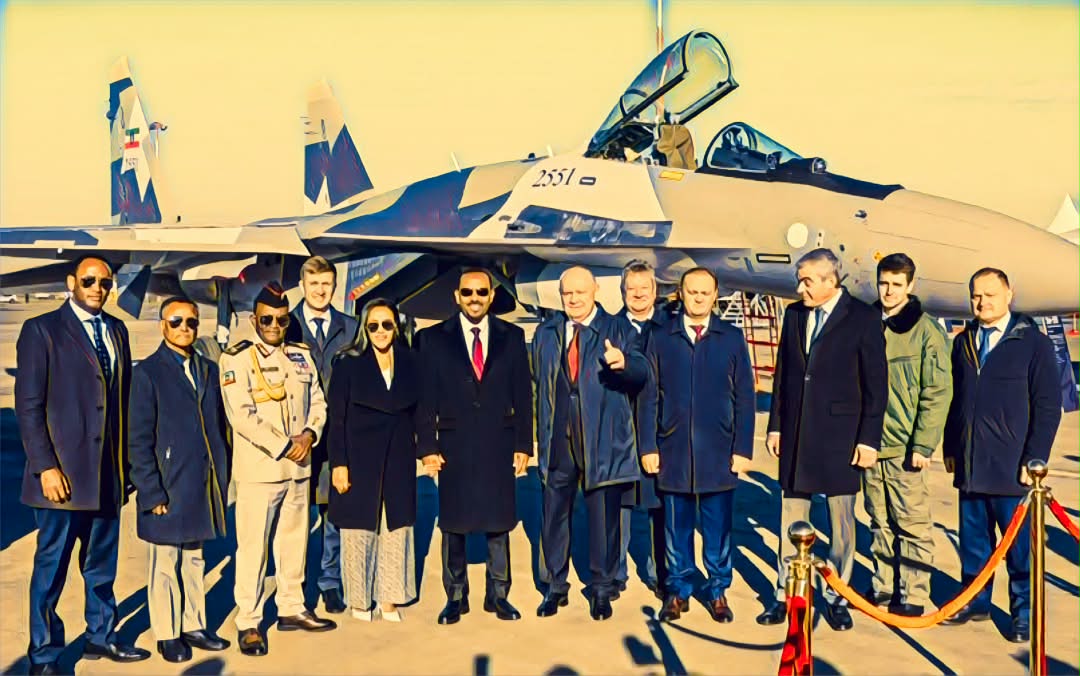
Ethiopia has acquired 12 Su-35 fighter jets from Russia.
-
Abiy also announced plans to acquire four S-400 air defence systems.
-
The acquisitions come amid renewed Tigray tensions and strained relations with Eritrea.
Ethiopia has acquired 12 Su-35 fighter jets from Russia as Prime Minister Abiy Ahmed moves to strengthen the country’s military capabilities amid renewed tensions and fighting in the northern Tigray region.
Abiy announced the acquisition while attending the third Russia-Africa Summit in Moscow, describing the deal as a major step towards improving Ethiopia’s defence preparedness.
He said the agreement to acquire the aircraft had been reached with Russia several years ago, adding that the jets arrived ahead of the expected schedule.
The Prime Minister also disclosed plans to acquire four S-400 air defence systems from Moscow, further expanding the country’s military equipment.
Abiy described Russian President Vladimir Putin as a close friend of Ethiopia and said cooperation with Moscow would help strengthen the country’s ability to respond to security threats.
He argued that building sufficient military capacity was essential for Ethiopia’s survival and security in a region facing complex geopolitical challenges.
Su-35 jets to strengthen air power
Abiy said the Su-35 fighter jets would provide Ethiopia with additional capabilities for both air-to-air and air-to-ground operations.
He stressed that modern military equipment was necessary to address emerging security threats, noting that the country’s defence strategy should not depend solely on unmanned aerial vehicles, commonly known as drones.
The Prime Minister said Ethiopia needed to develop capabilities across different military platforms, including fourth-generation fighter aircraft such as the Su-30 and Su-35.
The Su-35 is a Russian-made multirole fighter designed to carry out air combat and ground attack missions. Its acquisition is expected to expand Ethiopia’s air force capabilities.
Abiy also emphasised the importance of strengthening air defence systems, with the planned acquisition of four S-400 systems forming part of the broader military modernisation effort.
Russia and Ethiopia deepen military ties
The latest acquisition builds on years of defence cooperation between Ethiopia and Russia.
The two countries have signed several military cooperation agreements, including a 2021 arrangement aimed at strengthening military training, technical cooperation and defence technology.
Russia has maintained military and diplomatic relationships with several African countries, while Ethiopia has continued to seek international partnerships to strengthen its defence capabilities.
The latest announcements at the Russia-Africa Summit further underline the importance of Moscow in Ethiopia’s military procurement plans.
Tigray tensions raise security concerns
The announcement comes amid renewed tensions in northern Ethiopia, where the federal government and the Tigray People’s Liberation Front (TPLF) have faced a breakdown in their fragile peace arrangement.
The 2022 peace agreement ended a devastating two-year civil war between federal forces and Tigrayan fighters. However, tensions have resurfaced, with both sides accusing each other of violating the agreement.
The renewed instability has raised concerns about the possibility of further conflict in the region.
Ethiopia has also accused neighbouring Eritrea of supporting the TPLF, a claim the Eritrean government has denied.
Relations between Addis Ababa and Asmara remain strained, partly because of Ethiopia’s efforts to secure direct access to the sea.
Abiy has described maritime access as an existential issue for Ethiopia, while Eritrea views related demands as a threat to its sovereignty.
Eritrea became independent in 1993 after a prolonged struggle, leaving Ethiopia as a landlocked country.
Regional tensions shape Ethiopia’s defence strategy
Ethiopia’s planned acquisition of advanced fighter jets and air defence systems comes as the country confronts both internal security challenges and wider regional tensions.
The government has presented the military purchases as necessary to strengthen national defence and improve its ability to respond to potential threats.
However, the renewed tensions in Tigray and strained relations with Eritrea have added to concerns about stability in the Horn of Africa.
The acquisition of the Su-35 jets and planned S-400 systems therefore form part of Ethiopia’s broader effort to modernise its military as it navigates an increasingly complicated security environment.