
KEY POINTS
-
Presidents William Ruto and Félix Tshisekedi have agreed to restore full diplomatic relations after tensions over the conflict in eastern DR Congo.
-
Kinshasa previously accused Kenya of hosting Congolese rebel and opposition figures, including members of the M23-linked alliance.
-
The two countries also agreed to strengthen trade, regional cooperation and collaboration on Ebola response efforts.
Kenya and the Democratic Republic of Congo (DR Congo) have agreed to restore full diplomatic relations following tensions over the conflict in eastern DR Congo and accusations involving rebel groups and opposition figures.
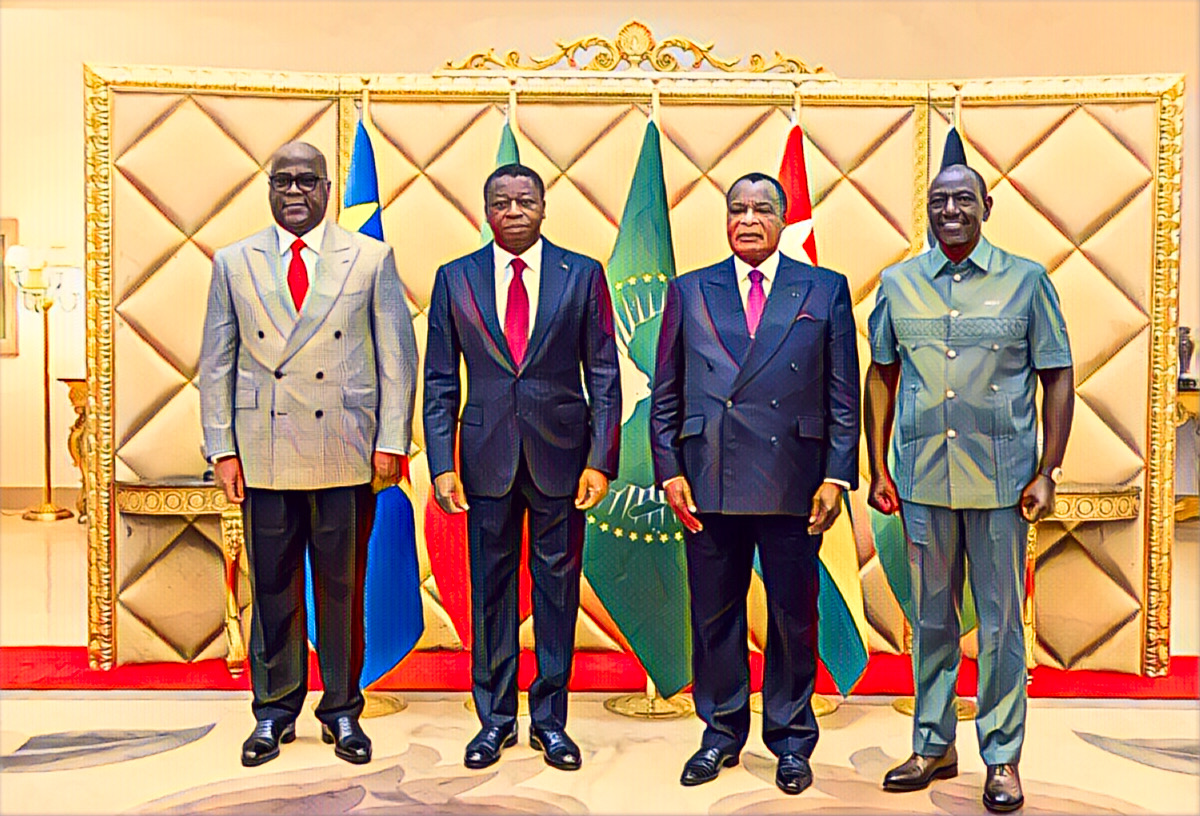
Kenyan President William Ruto and DR Congo President Félix Tshisekedi reached the agreement during a summit held on Sunday in Oyo, Congo-Brazzaville, hosted by President Denis Sassou Nguesso.
The meeting was facilitated by Sassou Nguesso, with Togolese President Faure Essozimna Gnassingbé serving as mediator.
In a joint statement, the two leaders reaffirmed their commitment to respecting sovereignty, territorial integrity, non-interference in the internal affairs of states and the peaceful settlement of disputes.
They also agreed to strengthen cooperation through regional mechanisms and promote good neighbourliness between the two countries.
Relations deteriorated over rebel and opposition groups
Diplomatic relations between Kenya and DR Congo have been strained since 2023, when Kinshasa accused Nairobi of hosting leaders involved in the formation of a rebel alliance that included the M23 movement.
The accusations prompted DR Congo to recall its ambassador to Kenya, while tensions worsened when Kinshasa refused to accredit Kenya’s nominated ambassador.
The dispute intensified after the Congo River Alliance, a political and military coalition that includes M23, was launched in Nairobi in 2023.
DR Congo accused Kenya of allowing Congolese political and rebel figures to operate from its territory and of supporting efforts to destabilise the country.
Relations deteriorated further in March last year when Kenya appointed a consul-general to Goma, the capital of North Kivu province, after the city fell to M23 forces.
Kinshasa objected to the appointment, arguing that it undermined the country’s territorial integrity and appeared to legitimise the rebel group’s occupation of the city.
Hosting of former president Joseph Kabila worsened tensions
The diplomatic dispute escalated again in October 2025 when Kenya hosted a meeting of Congolese opposition figures, including former President Joseph Kabila.
Kabila was sentenced to death in absentia in 2025 on charges including war crimes and treason. He denied the allegations but did not appear in court to defend himself.
He has since been named leader of the Front for the Refoundation of the Nation, a new rebel coalition that replaced the Congo River Alliance.
The developments further strained relations between Nairobi and Kinshasa, with DR Congo expressing concerns about Kenya’s role in hosting political figures it considers a threat to its stability.
Leaders agree to strengthen trade and regional cooperation
Beyond restoring diplomatic ties, Ruto and Tshisekedi discussed ways to deepen trade cooperation, promote economic development and strengthen regional integration.
Both countries are members of the East African Community (EAC), although DR Congo’s membership has been complicated by tensions involving Rwanda and the M23 rebellion.
DR Congo joined the regional bloc in 2022 but has repeatedly accused Rwanda of supporting M23 rebels operating in its eastern territories. Rwanda has denied the allegations.
The renewed agreement between Kenya and DR Congo is expected to help improve relations and strengthen cooperation within regional institutions.
Kenya and DR Congo seek cooperation on Ebola response
The two leaders also agreed to work together to control the spread of Ebola as the outbreak continues to affect DR Congo and neighbouring countries.
World Health Organization Director-General Tedros Adhanom Ghebreyesus said on Sunday that increased attacks in eastern DR Congo since late October had seriously disrupted efforts to contain the virus.
He said heavy fighting near the area where the outbreak initially emerged had affected health workers and weakened the broader response.
More than 5,700 people have died and about 11,000 have been infected with Ebola in DR Congo since the outbreak was declared in May, according to the report.
The latest outbreak, caused by the Bundibugyo strain of the virus, has also spread beyond DR Congo, with cases reported in Kenya, Uganda and Nigeria.
The agreement between Ruto and Tshisekedi is expected to provide a framework for renewed diplomatic engagement as the two countries confront security, economic and public health challenges across the region.