
KEY POINTS
-
Kenya is preparing for potentially severe El Niño-related flooding.
-
Up to 100,000 people in Nairobi’s low-income settlements could be at risk.
-
Almost 900,000 people in Kenya could face displacement, according to the IOM.
Kenya is stepping up preparations for potentially severe flooding as forecasters warn that a powerful El Niño weather event could bring unusually heavy rainfall across parts of East Africa.
The warnings have raised fears among residents of informal settlements in Nairobi, particularly communities living close to rivers and poorly maintained drainage channels.
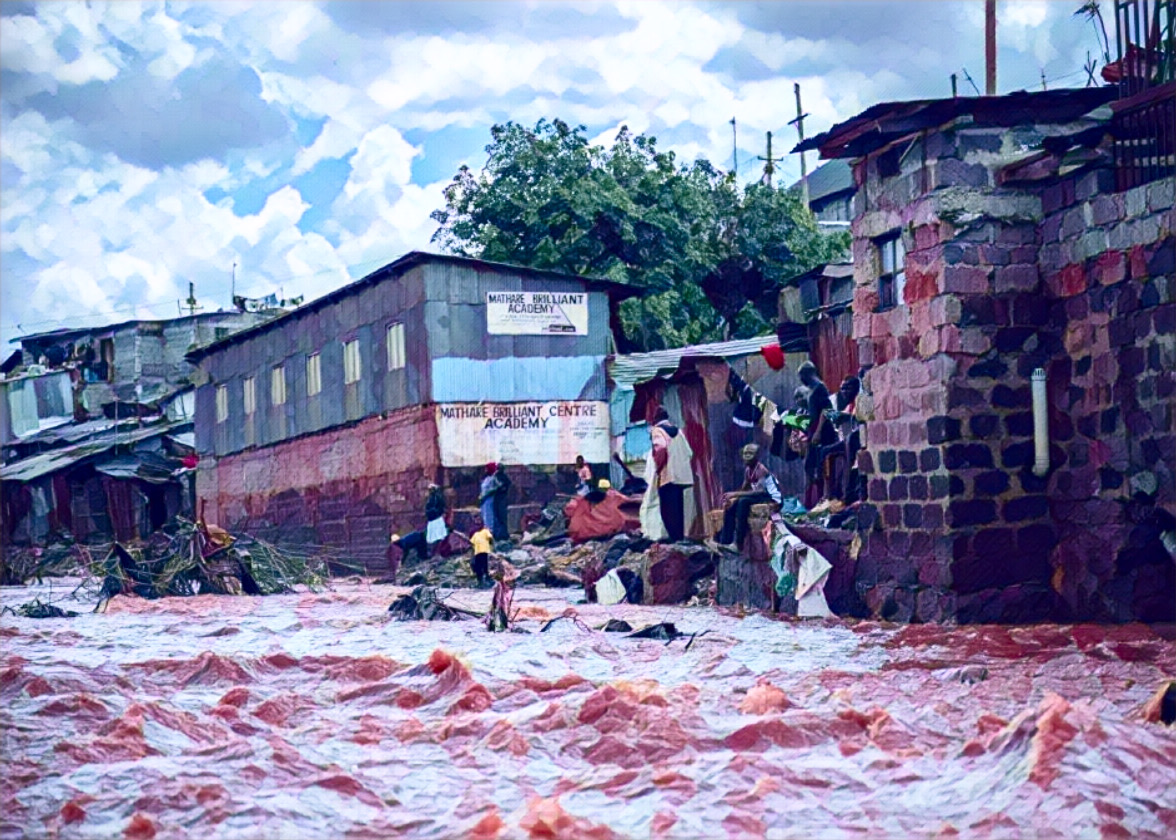
The concern is especially strong in Kibera, one of Kenya’s largest informal settlements, where residents are still recovering from devastating floods earlier in 2026 that killed more than 60 people across the country.
Among those worried is 62-year-old Agnes Shikoli, whose home stands just metres from the Ngong River. Her house was flooded during the March rains, leaving some of her belongings, including a television, damaged.
Shikoli also lost her 58-year-old sister, Beatrice Khalayi, who died from electrocution after floodwater entered her home.
With another rainy season underway, she fears that rising water levels could destroy her home or sweep away members of her family.
“I feel like it can kill us. These houses aren’t made of stone,” she told the BBC.
Nairobi clears rivers and drainage channels
The Kenyan government has intensified efforts to clear rubbish from rivers and drainage systems in preparation for the expected heavy rainfall.
Workers under the Climate Worx programme, which operates through President William Ruto’s office, have been removing waste from the Ngong River and other waterways across Nairobi.
The initiative is part of a wider effort to rehabilitate the city’s rivers and reduce the risk of flooding. Similar operations are taking place in different parts of the capital, where blocked drains and inadequate sewage infrastructure have contributed to previous flood disasters.
Nairobi County disaster management chief Bramwell Simiyu said drainage systems had remained neglected for many years, making it difficult for excess rainwater to flow away.
He said removing accumulated rubbish from waterways and drainage channels would help reduce flood risks and save lives.
Outdated drainage system puts millions at risk
Nairobi’s drainage infrastructure is struggling to cope with the city’s rapid population growth and expanding settlements.
According to Simiyu, the existing drainage network was developed about 30 years ago to serve a population of approximately 2.5 million people.
The city now accommodates around 7 million people during the daytime and 5.5 million at night, placing considerable pressure on its existing infrastructure.
Simiyu estimated that as much as $192 million would be required to completely upgrade the city’s drainage and sewage systems.
However, the financial constraints facing both the national government and Nairobi’s county administration could make it difficult to raise the required funding.
Informal settlements such as Kibera and Mathare face particularly high risks because many homes are built close to rivers, sometimes directly on riverbanks or slopes.
Poor housing structures and limited drainage facilities leave residents vulnerable when heavy rainfall causes rivers to overflow.
Up to 100,000 people could be affected
Authorities have warned that tens of thousands of residents in low-income communities could be exposed to flooding.
Simiyu said the worst-case assessment suggested that up to 100,000 people could be at risk, although moderate projections placed the number at about 20,000 people, representing approximately 5,000 households.
The Nairobi River Basin Regeneration programme has also identified settlements near waterways and weak enforcement of development regulations as factors increasing flood exposure.
It recommended establishing protective buffer zones along rivers and relocating communities where necessary, while ensuring that such movements are carried out humanely.
Simiyu said authorities had identified 167 designated holding grounds where displaced residents could be accommodated and provided with relief food and other supplies.
However, relocating people remains difficult because poverty prevents many residents from securing alternative accommodation.
Shikoli said she wanted to leave her home near the Ngong River but could not afford to move. She earns about $2 a day selling groundnuts and fruit from a small stall.
Forecasters warn of a powerful El Niño
Kenya’s meteorological department has warned that November is usually the peak of the country’s short rainy season, which runs from October to December.
A September forecast by the Intergovernmental Authority on Development (IGAD) put the probability of a very strong El Niño occurring between October and December 2026 at 81 per cent.
Although the heavy rainfall initially anticipated had not materialised at the time of the BBC report, meteorologists remained concerned about the potential impact.
The expected conditions have drawn comparisons with the 1997-1998 El Niño, which caused widespread flooding and destruction across parts of East Africa.
Weather forecaster Jemima Gacheru said similarities in Indian Ocean temperature conditions between the earlier event and the current period had raised concerns about unusually heavy rainfall.
She explained that the combination of a strong El Niño in the Pacific Ocean and a positive Indian Ocean Dipole could produce enhanced rainfall across several parts of Kenya.
The Indian Ocean Dipole describes differences in sea-surface temperatures between the western and eastern parts of the Indian Ocean, which can influence rainfall patterns across the region.
Somalia and other African countries face climate risks
The threat of extreme weather extends beyond Kenya, with neighbouring Somalia also preparing for possible flooding and other climate-related emergencies.
Somalia’s disaster management agency has warned that approximately 1.2 million people could be displaced by extreme weather, including floods and drought.
The 1998 floods killed about 2,000 people in Somalia and forced another 250,000 to flee their homes, according to the Food and Agriculture Organisation. Some areas also lost up to 80 per cent of their crops.
The United Nations’ Integrated Food Security Phase Classification (IPC) has warned that El Niño-related disruptions could worsen food insecurity in Somalia, particularly through their impact on supply chains.
Elsewhere in Africa, forecasters fear the weather phenomenon could bring prolonged dry conditions and extreme heat.
Farmers in parts of West Africa, including the semi-arid Sahel, as well as southern African countries, could face reduced rainfall and increased risks of crop failure.
The International Organization for Migration has warned that almost 900,000 people in Kenya could be forced from their homes this year, largely because of the anticipated floods.
Poverty complicates preparations
The potential impact of El Niño could worsen existing problems in vulnerable communities already struggling with poverty, inadequate housing and limited access to basic infrastructure.
In Nairobi, residents living close to rivers face the possibility of losing their homes, while in Somalia, communities already affected by drought could face further pressure on food supplies and livelihoods.
Although governments and humanitarian agencies are preparing for possible emergencies, the precise timing, intensity and geographical spread of the expected weather conditions remain uncertain.
For Shikoli and other residents of Kibera, preparations are complicated by the cost of finding safer accommodation.
Despite being advised by local authorities to leave their riverside homes until the rainy season ends, many families have nowhere affordable to go.