
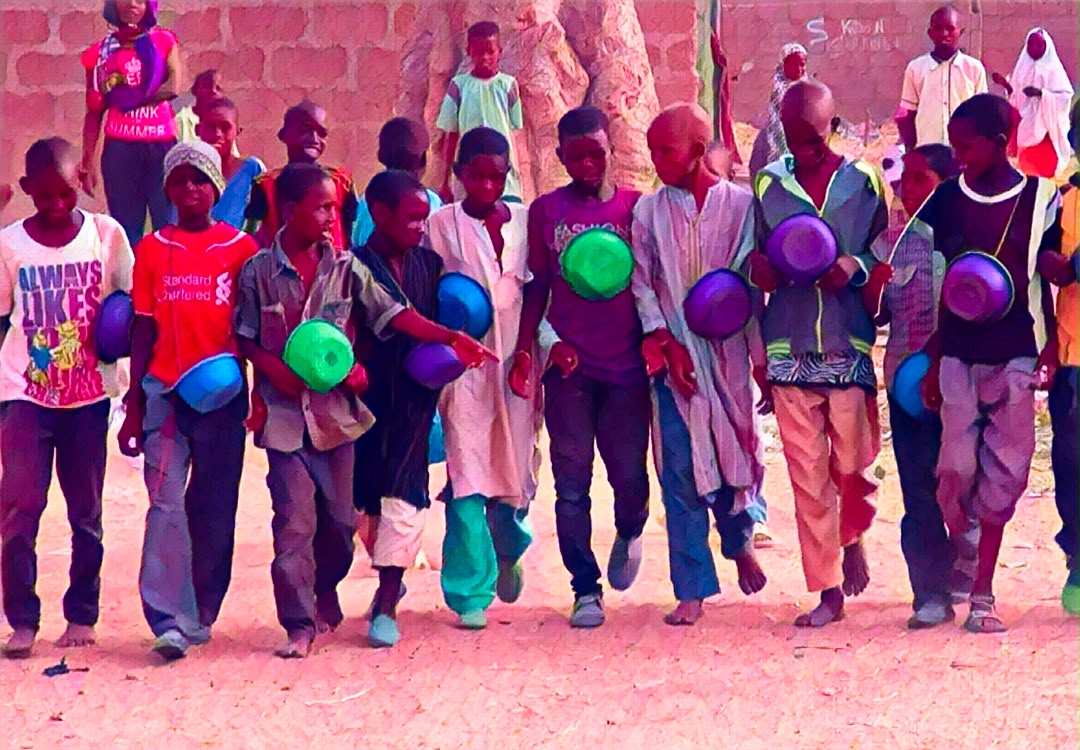
Jigawa almajiri pupils who have long survived on food given by residents say the charity is drying up, leaving many to work or go hungry as inflation squeezes households in Dutse and other towns.
The pupils, most of whom live with the head of their Islamic school, known as a Tsangaya, rely on daily meals from nearby households while they study the Quran. Families have cooked extra food for them for centuries, and the pupils went door to door with plastic bowls.
Why the Jigawa almajiri pupils are going hungry
The newspaper Arewa PUNCH found that many households that once gave willingly now say they cannot feed their own children and have cut back or stopped. Aliyu Ashiru, a resident of Dutse, said the situation is worrying and strange to northern culture.
Pupils now work for meals. Some cut grass for cattle herders, carry firewood to homes, fetch water, wash clothes or plates, repair shoes or carry trash to dump sites. A 12 year old in Dutse who repairs shoes said, “now people will tell us there is no food.”
Another pupil, aged 10, said he cuts grass for herders before he is fed, while a 13 year old said he fetches water and washes plates for residents and restaurants. Some go from morning until afternoon without eating.
Learning suffers as pupils search for food
Isa Mohammad, who heads a Tsangaya school in Sakwaya village near Dutse with more than 80 pupils, said many leave in the morning and return in the evening, too hungry to concentrate on recitation. Audu Haruna, who runs a school in Birnin Kudu, said feeding pupils has become a burden as community support nearly ends.
Islamic cleric Sheikh Na’ibi Kazaure called the situation painful and urged parents and teachers to take more responsibility, while government supports the system. Activist Musbahu Basirka called it a humanitarian issue and warned that society will pay later if the pupils are neglected.
What the state says it is doing
Abubakar Maje, executive secretary of the Jigawa State Tsangaya School Board, said the government is aware of the problem. About 10,000 pupils from selected Tsangaya schools in Dutse, Kiyawa, Kafin Hausa, Hadejia, Auyo, Ringim and Taura now receive three meals a day, he said, in areas designated as begging free zones. The program is still a pilot.
A second group of 4,180 pupils, including 2,180 existing and 2,000 newly enrolled, benefits from the government’s intervention in model Tsangaya schools. Maje also said the state plans to support 130 integrated Tsangaya schools with about 17,000 pupils.
Support would include seeds, fertilizer, farm inputs and a monthly stipend for school heads, so they can grow food for their pupils and stop the practice of sending them to beg.
No start date was given for the farm support, which the government says will come soon.
Until that help arrives, the pupils will keep bartering their labor for meals, and the age old charitable habit of feeding them will depend on households that are struggling to feed themselves.