
KEY POINTS
-
MSF says international funding for the DRC Ebola response is not adequately reaching frontline workers and affected communities.
-
The outbreak has reportedly killed more than 5,300 people and caused over 11,000 confirmed cases.
-
The Bundibugyo strain has no approved vaccine or specific treatment, prompting MSF to call for wider access to the available ERVEBO vaccine.
Doctors Without Borders (MSF) has warned that international funding for the Ebola response in the Democratic Republic of Congo (DRC) is failing to reach healthcare workers and communities battling the outbreak.
The medical charity said on Thursday, November 12, that the outbreak, which began in the conflict-affected Ituri province in mid-May, remained out of control six months after it was detected.
According to the report, the outbreak has killed more than 5,300 people and resulted in over 11,000 confirmed cases, making it the country’s worst Ebola epidemic.
MSF called on the Congolese government to improve transparency and accountability over the use of funds committed to containing the disease.
Despite hundreds of millions of dollars reportedly mobilised by the international community, MSF said many frontline responders were struggling to access basic resources.
The organisation’s international president, Javid Abdelmoneim, said healthcare workers in several areas were not receiving their salaries or adequate training. Ambulances were also operating without fuel, while medical supplies and other forms of support remained insufficient.
MSF further reported that some surveillance teams existed only on paper, with little evidence of their presence in communities where Ebola infections were being reported.
Abdelmoneim described the situation as unacceptable, arguing that resources committed to the response were not translating into adequate support for patients, healthcare workers and affected communities.
The charity also raised concerns about the uneven distribution of response activities, saying some areas were receiving excessive attention while other outbreak hotspots faced increasingly urgent needs.
Hospitals Become Centres of Infection
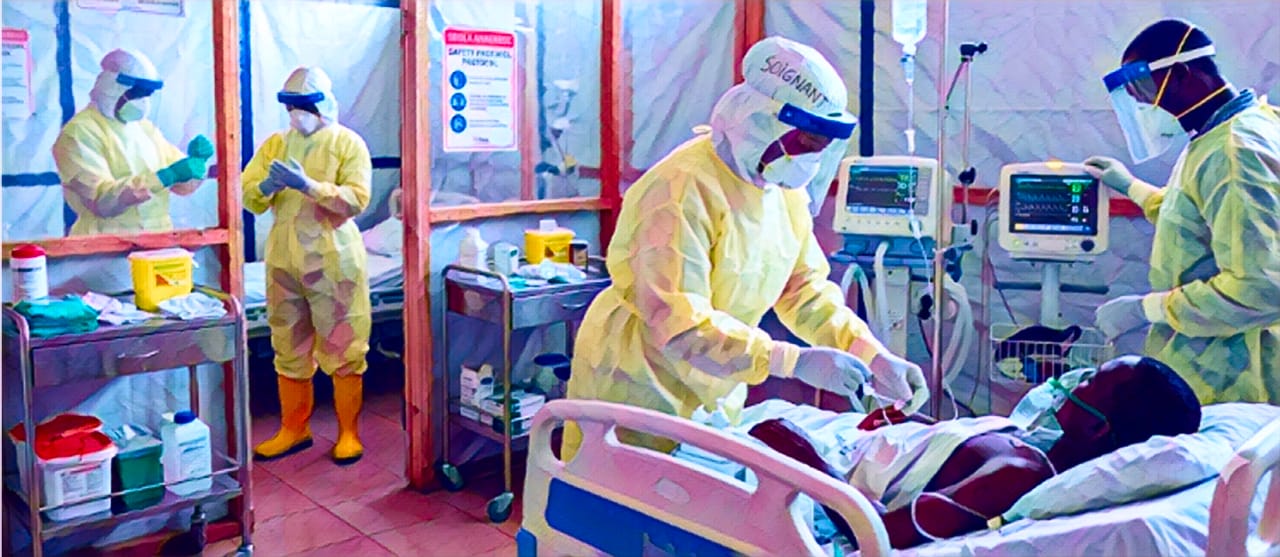
MSF warned that inadequate infection prevention and control measures had turned some healthcare facilities into additional centres of Ebola transmission rather than places where patients could receive treatment safely.
In one area of North Kivu province in eastern DRC, the organisation said close to three-quarters of Ebola patients had contracted the virus inside a healthcare facility.
The finding raises concerns about the safety of hospitals and the ability of healthcare workers to protect themselves and patients while treating infected people.
MSF said urgent improvements were needed in staffing, oversight and operational support to strengthen the response.
MSF Criticises Ebola Surveillance System
The charity also described the country’s Ebola surveillance system as deeply problematic.
Although it acknowledged that mistrust among communities made it difficult to monitor infections and identify contacts, MSF said the long absence of government services in some affected areas had contributed to the challenge.
It called for stronger supervision, more personnel and better operational support to improve the identification and monitoring of suspected cases.
The outbreak has also spread beyond DRC’s borders to Uganda, Kenya and Nigeria, according to the report.
Ebola is transmitted through direct contact with the bodily fluids of infected people or contaminated materials, making early detection, isolation and infection prevention important in limiting transmission.
No Approved Vaccine for the Current Virus Strain
The current outbreak is caused by the Bundibugyo strain of Ebola, for which no approved vaccine or specific treatment is currently available.
Although development of a vaccine targeting the strain is under way, MSF said it could take several months before one becomes available.
The organisation is therefore calling for broader access to the ERVEBO vaccine, which it described as the only Ebola vaccine currently available at scale.
Guyguy Manangama, an epidemiologist and MSF’s deputy director of operations, argued that the absence of a Bundibugyo-specific vaccine should not prevent the use of the available vaccine.
He warned that delays in providing preventive tools would leave healthcare workers, frontline responders, contacts of confirmed cases and affected communities exposed to the potentially deadly disease.